A Journey to Remember: Exploring the Majestic Al-Hasawna Mountains

I finally returned from a trip that will remain in my memory for a long time. This time, it was in the Al-Hasawna Mountains, where we spent an entire week isolated from the world. The experience was more than just a journey; it was a profound encounter with nature, history, and the resilient spirit of the desert.

The Landscape of Al-Hasawna

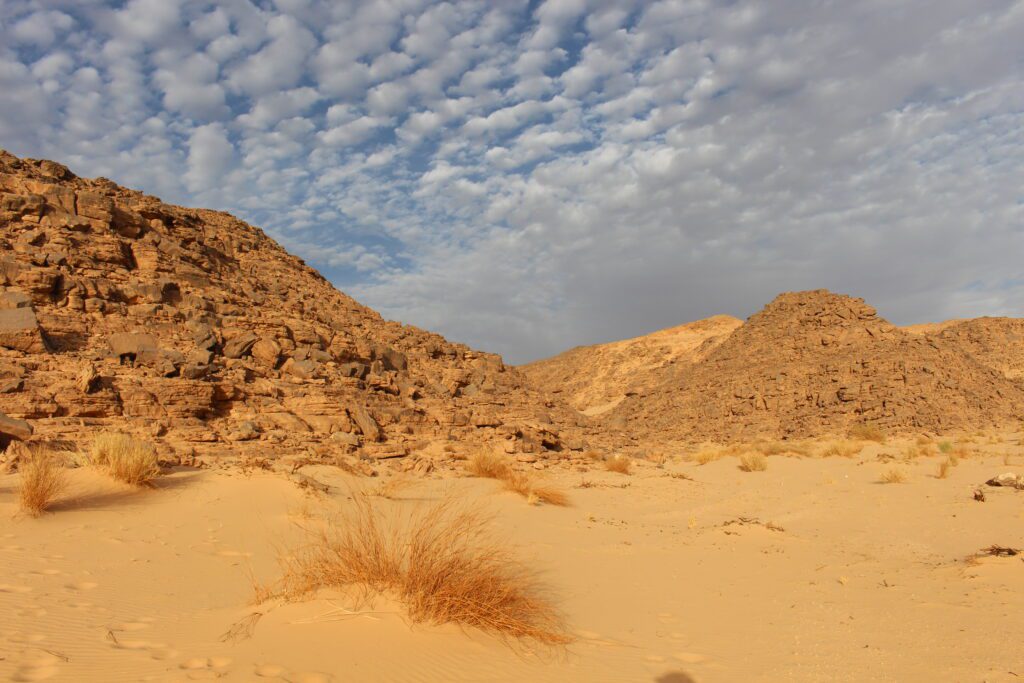
The Al-Hasawna Mountains, located in the heart of the Libyan desert, present a rugged and awe-inspiring landscape. The mountains are a testament to the earth’s natural forces, sculpted over millennia by wind and time. The rocky terrain is interspersed with valleys that hold secrets of ancient civilizations and tales of survival against the harshest elements.

Every night we camped in a different valley, each with its unique charm and mysteries. The silence of the desert was profound, broken only by the whispering winds and the occasional call of a distant bird. The stars overhead were a dazzling canopy, offering a celestial show unlike any other.

Encounters with Wildlife

Despite the arid conditions, Al-Hasawna is home to a surprising diversity of wildlife. We saw camels grazing alone, a common sight in these parts. The camels are left there to graze alone for a period that may reach seven months. Remarkably, they return to their owner’s place when they are thirsty. However, some camels lose their way in the vast desert and die.

Birdlife in Al-Hasawna is both varied and fascinating. During our journey, we spotted several birds, including hawks, which have adapted to the challenging environment.

The mammalian inhabitants are equally intriguing. Traces of deer and fennecs (desert foxes) were evident in the sand. The fennecs, with their distinctive large ears, are specially adapted to the desert environment, capable of hearing the faintest sounds of prey moving underground. We also saw traces of Barbary sheep, an animal that is threatened by extinction in Libya, as well as traces of gazelles.

Reptilian life is also abundant. We encountered numerous lizards, each perfectly camouflaged against the rocky backdrop. One of the most memorable sights was a modern hawk’s nest, perched high on a cliff, symbolizing the tenacity of life in this harsh environment.

Black camels
White-crowned wheatear bird
We found this hawk nest in a cave, we needed to climb a mountain to reach the cave.

The Harsh Realities of the Desert

The nature is very harsh there, as it has not rained for eight years in some valleys. The lack of rainfall has created a tough environment for both flora and fauna. Yet, life persists. The flora, though sparse, includes unique plants that have adapted to conserve water and survive the extreme temperatures.

One of the stark reminders of the desert’s dangers came when one of our companions survived a potentially fatal sting from a small yellow scorpion. The quick thinking and expertise of our desert guide, who used gasoline to treat the sting, undoubtedly saved his life. This incident underscored the perilous beauty of the desert, where danger lurks even in the smallest forms.

Historical and Cultural Insights

Al-Hasawna is not just a natural wonder; it is also a repository of human history. We saw inscriptions from the prehistoric period, of buffalo, giraffes, and lizards. These ancient carvings provided a glimpse into a time when the region’s climate was vastly different, supporting a richer variety of life.

The graves in Al-Hasawna tell poignant stories of past inhabitants. We saw graves from the days of the Garamantes, an ancient Berber people, and more recent graves of Arab caravans, which the residents of the region call Hilali graves (named after “Banu Hilal”; an ancient Arabic tribe). The distinction between the graves of men and women is a fascinating cultural marker. One particularly moving sight was a trio of graves—of a man, a woman, and a child, possibly a family that faced a tragic end in the unforgiving desert. Death is bad, but it’s worse in the desert.

Me setting beside a prehistoric inscription of a buffalo
Me standing beside a Hilali grave of a man

The Adventure and Reflection

The week-long expedition was a test of endurance and adaptability. The cold was very harsh, especially during the night, but the thrill of exploration and discovery kept our spirits high. Each day brought new challenges and revelations, from navigating rocky terrains to deciphering ancient symbols.

Camping under the open sky, with the mountains as our silent sentinels, was a humbling experience. The vastness of the desert and the timelessness of the landscape offered a profound sense of perspective. It was a reminder of the transient nature of human existence against the backdrop of nature’s grandeur.

Threats to Biodiversity

Throughout our journey, we also observed the unfortunate impact of human activity on the environment. We found garbage in almost every valley, most of which were plastic bottles that trapped various kinds of desert beetles. This litter poses a significant threat to the region’s delicate ecosystem, endangering insects and other small creatures.

Moreover, the threat of poaching looms over the already endangered species like the Barbary sheep and gazelles. The survival of these animals is jeopardized by illegal hunting practices, which deplete their populations and disrupt the natural balance of the desert. Conservation efforts are crucial to protect the unique biodiversity of Al-Hasawna and ensure that future generations can witness its wonders.

My journey to the Al-Hasawna Mountains was an unforgettable adventure that combined the thrill of exploration with the joy of discovery. The trip allowed me to connect with nature in its rawest form, appreciate the resilience of life in harsh conditions, and reflect on the rich tapestry of human history etched into the desert’s fabric.

The memories of the solitary camels, the ancient inscriptions, the resilient wildlife, and the stark beauty of the desert will remain etched in my mind forever. Al-Hasawna is a place where time stands still, where every rock and grain of sand tells a story, and where the spirit of adventure is ever-present. This trip was not just a journey through a landscape but a journey through time and the essence of life itself.